TL;DR: The Amazon honeymoon period is a critical 30–60 day window when new products receive algorithmic favor. Use strategic launch tactics, keyword optimization, and a weekly rank tracking report template to maximize visibility, accelerate sales velocity, and lock in long-term rankings.
Key Takeaways
- The Amazon honeymoon period (first 30–60 days) offers algorithmic advantages for new product rankings and visibility.
- Proactive keyword targeting, early sales velocity, and customer reviews are essential to capitalize on this window.
- Using a Weekly Rank Tracking Report Template helps teams monitor performance, adjust strategies, and maintain momentum.
- Internal tools like SellerSprite provide real-time insights for data-driven decisions.
- Post-honeymoon, sustained success depends on continuous optimization of content, pricing, and ad spend.
Table of Contents
Note on marketplaces: This guide is specifically optimized for the US market.
What Is the Amazon Honeymoon Period?
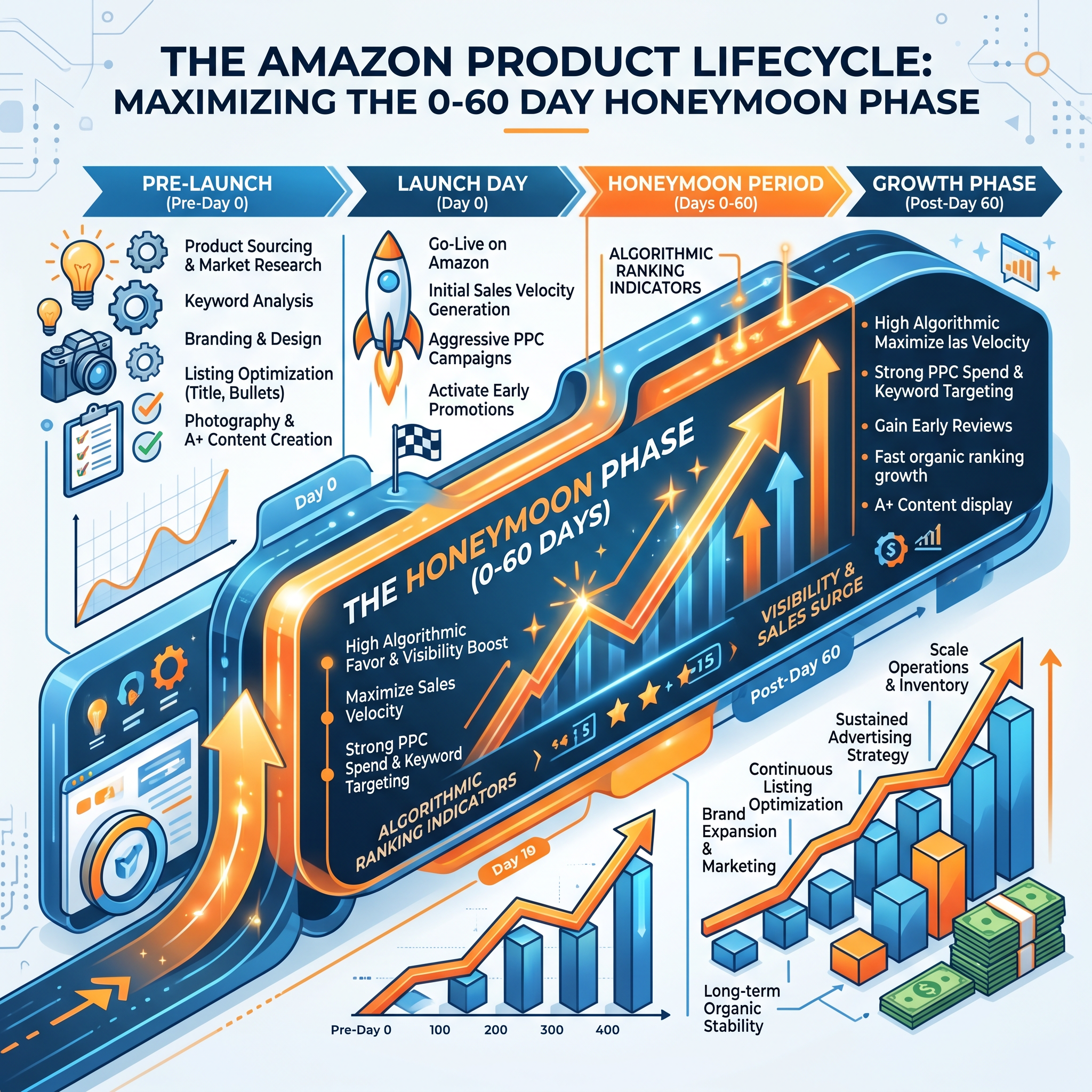
The Amazon honeymoon period refers to the first 30 to 60 days after a new product is launched on Amazon. During this time, Amazon's A9 algorithm gives new listings a temporary boost in search visibility and ranking potential. This isn't an official policy announced by Amazon, but rather a widely observed behavioral pattern confirmed by thousands of sellers, data analysts, and third-party tools like SellerSprite
Think of it as Amazon giving your product a "test run." The platform wants to see how customers respond—do they click? Do they buy? Do they leave positive reviews? If the answer is yes, Amazon rewards the listing with higher organic rankings, more impressions, and increased exposure in both search results and recommendation engines.
This period is especially crucial for new brands or private label sellers trying to break into competitive niches. Without the honeymoon boost, it can take months—or even years—to gain traction. But with the right strategy, you can turn this short window into long-term dominance.
Why the Honeymoon Period Matters for New Product Launches
Amazon’s algorithm is designed to prioritize products that deliver value to customers. But since new listings have no sales history, reviews, or engagement data, the system lacks signals to determine relevance and performance. That’s where the honeymoon period comes in—it acts as a grace period during which Amazon actively promotes your product to gather those initial data points.
If your product performs well during this time—high click-through rate (CTR), strong conversion rate (CVR), and early positive reviews—Amazon interprets this as a sign of quality and relevance. As a result, your listing gets pushed further up in search results, even for competitive keywords.
Conversely, if your product fails to generate interest, Amazon quickly deprioritizes it. After the honeymoon ends, regaining momentum becomes exponentially harder. This makes the first two months not just important—but mission-critical.
Key Benefits of the Honeymoon Period
- Increased Organic Visibility: Your product appears higher in search results, even without heavy ad spend.
- Faster Sales Velocity: Early sales signal popularity, which feeds back into the algorithm.
- Improved Keyword Rankings: You can rank for mid- to high-competition keywords faster than usual.
- Higher Conversion Rates: Customers are more likely to trust and purchase new products that appear at the top.
- Review Generation: More sales mean more opportunities for reviews, which further boost credibility.
For new sellers, this is your best chance to compete with established brands. For growing brands and marketing teams, it’s an opportunity to scale efficiently across categories.
Step-by-Step Strategy to Boost Ranking During the Honeymoon Period
Winning the honeymoon period isn’t about luck—it’s about execution. Follow this proven 6-step framework to maximize your chances of success.
Step 1: Optimize Your Listing Before Launch
You only get one first impression. Before your product goes live, ensure every element of your listing is optimized for both customers and Amazon’s algorithm.
- Title: Include primary keyword + brand + key benefit (e.g., "Organic Bamboo Toothbrush – Eco-Friendly, BPA-Free, Soft Bristles – 4-Pack")
- Bullet Points: Focus on benefits, not just features. Use secondary keywords naturally.
- Description: Expand on usage scenarios, materials, and value proposition.
- Images: Use high-resolution photos (1000x1000px), lifestyle shots, infographics, and zoom functionality.
- Backend Keywords: Fill all 249 bytes with relevant, non-repeating search terms.
Use tools like SellerSprite’s Keyword Research to identify high-opportunity, low-competition keywords to target early.
Step 2: Seed Initial Sales and Reviews
Amazon needs proof that your product sells. One of the fastest ways to trigger algorithmic favor is through early sales velocity.
While you should never buy fake reviews, you can ethically generate early feedback through:
- Vine Program: Enroll in Amazon’s free review program for new products.
- Request a Review Button: Automatically ask buyers for feedback post-purchase.
- Discount Campaigns: Offer limited-time promotions via email lists, social media, or influencer partnerships.
- Early Reviewer Program: (If available) Incentivize first buyers to leave reviews.
Aim for at least 10–15 reviews within the first 30 days. Products with 5+ reviews convert 200% better than those with none.
Step 3: Launch Targeted PPC Campaigns
Amazon PPC (Pay-Per-Click) advertising is essential during the honeymoon period. It drives immediate traffic, generates sales, and helps Amazon associate your product with specific keywords.
Start with these campaign types:
- Auto Campaigns: Let Amazon discover relevant search terms.
- Manual Exact Match: Bid aggressively on your top 5–10 high-intent keywords.
- Manual Phrase/ Broad Match: Capture long-tail variations.
- Product Targeting: Compete against similar listings.
Monitor ACOS (Advertising Cost of Sale) closely. In the first 30 days, it’s acceptable to run at a loss (e.g., 40–60% ACOS) to gain traction. The goal is data, not profit—yet.
Step 4: Monitor Keyword Rankings Daily
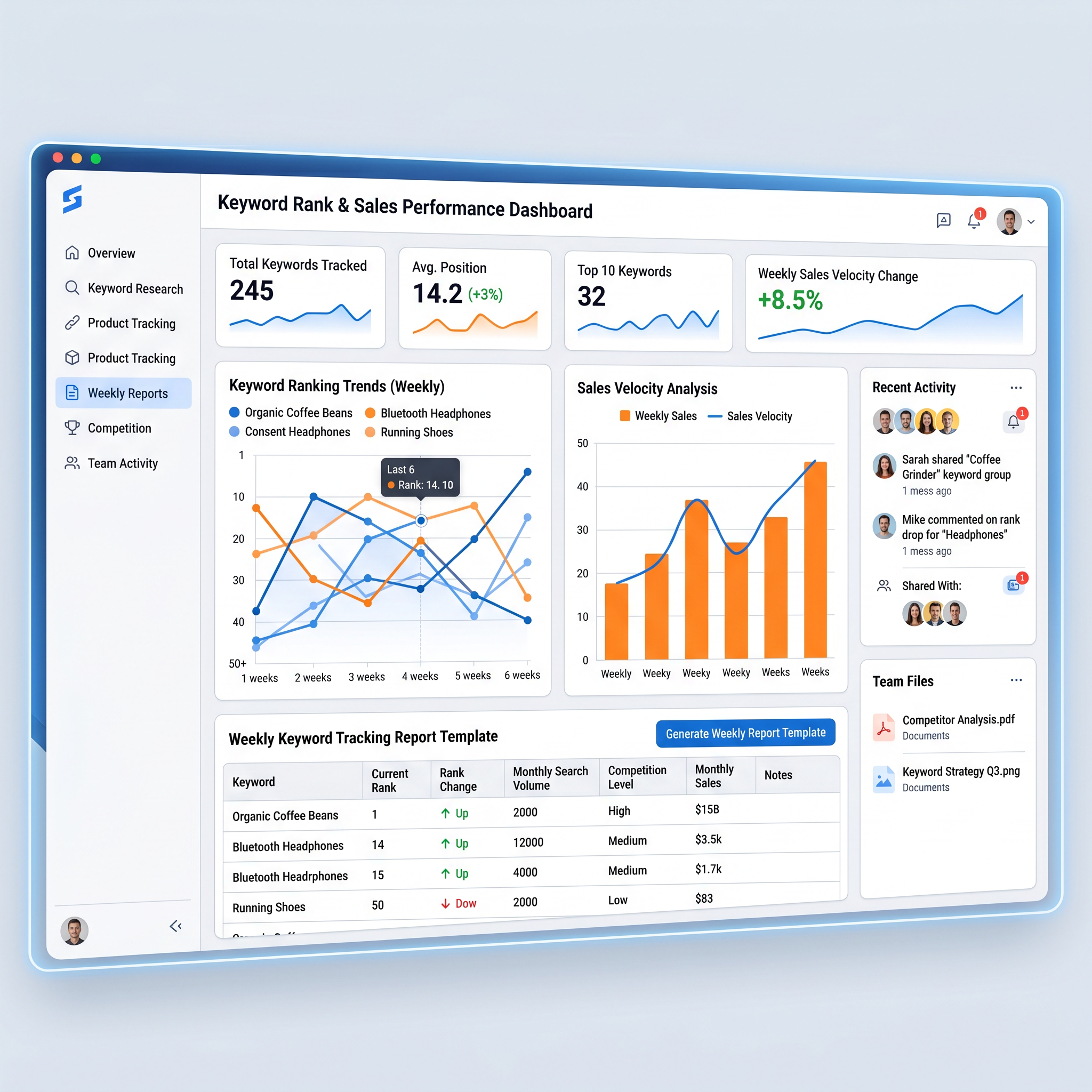
Rankings fluctuate daily, especially during the honeymoon period. Use a rank tracking tool like SellerSprite to monitor your position for target keywords across multiple devices and locations.
Pay attention to:
- Keyword movement (up/down trends)
- Search volume changes
- Competitor ranking shifts
- Impressions vs. clicks
If a keyword drops, investigate why—was there a price change? A new competitor? A negative review? Use this data to adjust your strategy.
Step 5: Adjust Pricing and Promotions Strategically
Pricing plays a major role in conversion rate and algorithmic favor. During the honeymoon period, consider running limited-time discounts to boost early sales velocity.
Effective tactics include:
- Coupons: Offer 10–20% off to increase perceived value.
- Lightning Deals: Create urgency with time-limited offers.
- Subscribe & Save: Encourage repeat purchases (if applicable).
- Bundle Offers: Increase AOV (Average Order Value) and perceived savings.
Avoid deep discounting that harms profitability. Instead, use promotions as a short-term lever to gain momentum.
Step 6: Leverage External Traffic
Amazon rewards listings that bring in external traffic. When customers click through from social media, email, or blogs, it signals strong brand demand.
Drive off-Amazon traffic by:
- Sharing your Amazon link on Instagram, TikTok, Facebook, and Pinterest
- Running influencer campaigns with trackable links
- Using email marketing to notify subscribers of new launches
- Submitting to deal sites like Slickdeals or Kinja
Use UTM parameters to track which channels drive the most conversions. This data informs future marketing decisions.
How to Use a Weekly Rank Tracking Report Template for Teams
Consistency is key during the honeymoon period. A Weekly Rank Tracking Report Template ensures your team stays aligned, monitors progress, and makes data-driven decisions.
Here’s what to include in your template:
1. Product & ASIN Information
- ASIN
- Product Name
- Launch Date
- Team Members Responsible
2. Keyword Performance Dashboard
- Target Keywords (Primary & Secondary)
- Current Rank (Day 7, 14, 21, 28, etc.)
- Rank Change (vs. previous week)
- Search Volume
- Impressions & Clicks (from Brand Analytics, if available)
3. Sales & Conversion Metrics
- Units Sold (Weekly)
- Sales Revenue
- Conversion Rate (CVR)
- Buy Box Ownership %
4. Advertising Performance
- Total Ad Spend
- Sales from Ads
- ACOS
- Top Performing Keywords
- ROAS (Return on Ad Spend)
5. Review & Rating Summary
- Total Reviews
- Average Rating
- New Reviews This Week
- Sentiment Analysis (Positive/Neutral/Negative)
6. Action Items & Strategy Adjustments
- Keyword to Add/Remove
- PPC Bid Adjustments
- Promotion Plans
- Listing Update Tasks
- Next Week’s Goals
Distribute this report every Monday. Hold a 30-minute team sync to review performance and plan the week ahead. Use SellerSprite’s analytics dashboard to auto-populate key metrics and save hours of manual work.
What Happens After the Honeymoon Period Ends?
After 60 days, Amazon stops giving your product special treatment. The algorithm now evaluates your listing based on long-term performance: sales velocity, customer satisfaction, review count, and ad efficiency.
If you’ve built strong momentum, your rankings will stabilize or continue growing. But if performance dips, Amazon may demote your listing—even if it was ranking #1 during the honeymoon.
How to Maintain Momentum Post-Honeymoon
- Keep Optimizing: Refresh images, update bullet points, and expand keyword coverage.
- Scale Ads Strategically: Shift from aggressive bidding to profitability-focused campaigns.
- Monitor Competitors: Use competitor tracking tools to stay ahead.
- Expand to New Keywords: Target long-tail variations and related categories.
- Launch Follow-Up Products: Build a brand ecosystem to cross-promote.
The goal is to transition from short-term launch mode to sustainable growth. Think of the honeymoon period as the spark—but your ongoing strategy is the fuel.
FAQ
What is the honeymoon period for new products on Amazon?
The honeymoon period is the first 30 to 60 days after a new product is launched on Amazon. During this time, Amazon’s algorithm gives new listings increased visibility and a better chance to rank higher in search results. This allows sellers to gain early sales, reviews, and data that help establish long-term performance. It’s not an official Amazon program, but a well-documented behavioral pattern observed by sellers and analytics platforms.
How can I maximize sales during the Amazon honeymoon period?
To maximize sales during the honeymoon period, optimize your listing before launch, generate early reviews through Amazon Vine or promotions, run aggressive PPC campaigns, monitor keyword rankings daily, adjust pricing strategically, and drive external traffic from social media or email. Using a weekly rank tracking report helps your team stay aligned and respond quickly to performance changes.
What strategies work best for ranking new products on Amazon in the US?
The most effective strategies include: optimizing your title, bullets, and backend keywords with high-intent search terms; launching with at least 10–15 early reviews; running targeted PPC campaigns (especially exact match); monitoring daily rank changes using tools like SellerSprite; leveraging external traffic sources; and using a structured weekly tracking template to guide team decisions. Success depends on speed, data, and execution.
Next Steps
- Download or create a Weekly Rank Tracking Report Template and share it with your team.
- Sign up for SellerSprite to access real-time rank tracking, keyword research, and competitor insights.
- Review your upcoming product launches and apply this 6-step strategy to maximize honeymoon period performance.
References
- Amazon Honeymoon Period Explained View
- Why Your Product Isn’t Ranking for Your Main Keyword View
- Keyword Volatility and Rank Fluctuations View
- How Amazon Keyword Ranking Works View
By SellerSprite Success Team
The SellerSprite Success Team combines deep expertise in Amazon algorithms, data analytics, and e-commerce growth strategies. With years of hands-on experience helping thousands of sellers—from beginners to enterprise brands—we deliver actionable insights grounded in real-world performance data. Our content is designed to empower sellers with tools, templates, and proven frameworks to win on Amazon.