A practical Amazon Associates playbook for creators, bloggers, YouTubers, and affiliate marketers who want to turn buyer-intent content into clicks, conversions, and long-term commission income.
If you are searching for an Amazon affiliate program, you probably want more than a definition. You want to know how the Amazon Associates program works, how to apply, what content actually converts, how to stay compliant, and how to build a content system that keeps bringing in traffic. This guide walks through the full path from signup to content planning, link placement, compliance, and optimization with SellerSprite.
Key takeaways
- Amazon Associates lets eligible creators, publishers, and bloggers earn commission income by recommending Amazon products through qualified affiliate links.
- The easiest part is signing up. The harder part is choosing the right niche, publishing buyer-intent content, and earning enough qualified traffic early.
- The highest-value affiliate content usually answers buying questions, such as product reviews, best-of lists, comparisons, gift guides, and how-to tutorials.
- Every affiliate page needs clear disclosure. Amazon also requires Associates to identify themselves with the required Associate statement.
- SellerSprite can help affiliates find buyer-intent keywords, validate products, study competitor ASINs, and use Review Analysis to turn customer pain points into better content angles.
Table of contents
- What is the Amazon Affiliate Program?
- How does the Amazon Affiliate Program work?
- How to apply to Amazon Associates step by step
- How to use Amazon affiliate links correctly
- What content converts best for Amazon affiliate marketing?
- Best traffic sources for Amazon affiliates
- Amazon affiliate disclosure and compliance rules
- International Amazon Associates notes
- How to use SellerSprite for affiliate content planning
- How to grow traffic and commission income over time
- FAQs
- About the author
- References
What is the Amazon Affiliate Program?
The Amazon Affiliate Program is officially called Amazon Associates. It is Amazon's affiliate marketing program for creators, publishers, bloggers, and qualifying websites or apps. As an Associate, you recommend products or eligible Amazon programs through special links. If a visitor clicks your link and completes a qualifying purchase or eligible action, you may earn commission income.
The reason Amazon Associates is attractive is simple: Amazon already has a massive product catalog, familiar checkout experience, and high shopper trust. You do not need to create a product, ship inventory, or handle customer service. Your job is to help the right shopper make a better buying decision.
Best fit
Amazon Associates is best for people who can publish useful content consistently, such as niche bloggers, YouTube creators, comparison site owners, email publishers, Pinterest creators, and review-focused content teams.
How does the Amazon Affiliate Program work?
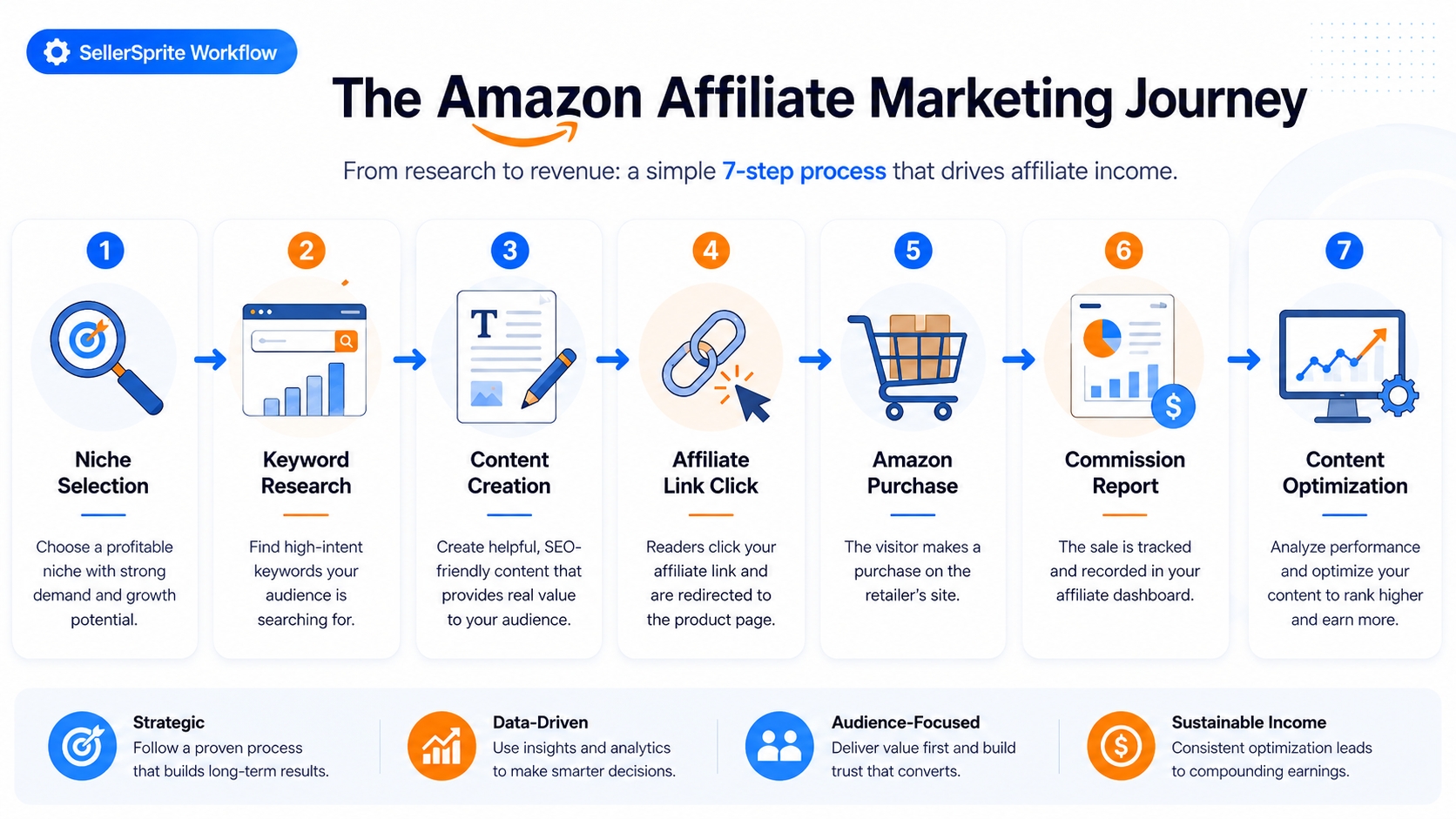
Amazon Affiliate Program (Amazon Associates) works like a simple referral system. You create content, add properly generated Amazon affiliate links, and send qualified visitors to Amazon. Amazon tracks eligible traffic through your Associate ID and reports clicks, orders, shipped items, and commission income in your Associates dashboard.
1. Publish
Create buyer-focused content that answers a real search question.
2. Link
Use Amazon's official linking tools to create Special Links.
3. Convert
Readers click, shop on Amazon, and complete qualifying purchases.
4. Optimize
Review reports, update content, and expand pages that bring clicks.
Amazon states that commission income differs by product category and eligible program. That means niche selection matters. A topic with strong purchase intent, enough search demand, and products that fit Amazon's commission structure is usually more valuable than a broad topic with vague traffic.
How to apply to Amazon Associates step by step
The signup process is straightforward, but your website, channel, or app should look useful before you apply. Do not apply with an empty site. Prepare a focused content base, clear navigation, and a disclosure page or statement first.
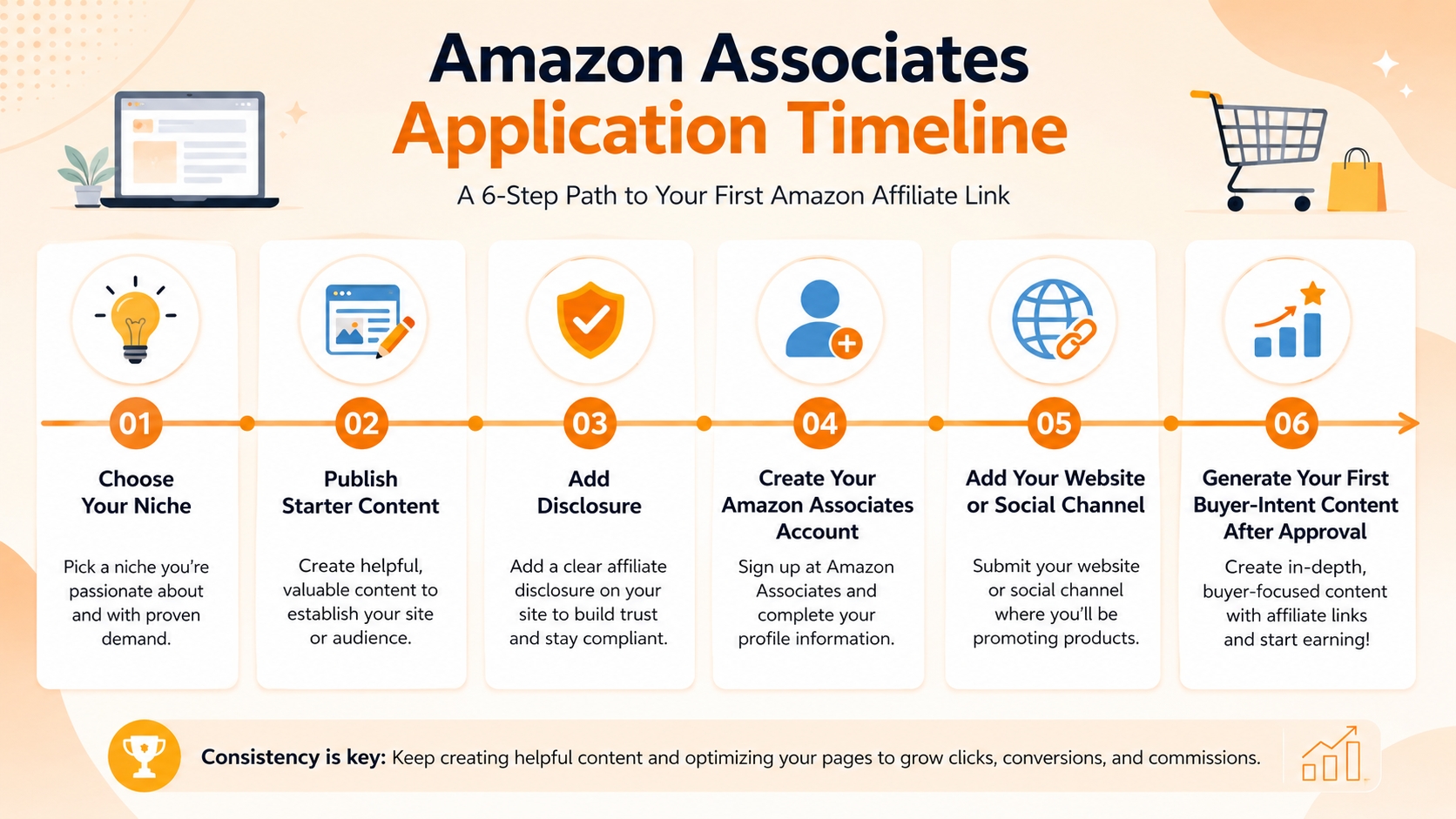
Step 1: Choose a focused niche
A focused niche makes your site easier to understand and easier to trust. Instead of starting with "home products," narrow the angle to "small apartment organization," "ergonomic home office gear," or "pet supplies for first-time dog owners." A clear niche helps readers, Amazon reviewers, and search engines understand what your site is about.
Step 2: Publish helpful starter content
Before applying, publish a small content base that proves your site is real. A practical target is 5-10 helpful posts or videos in one niche. Include an About page, Contact page, privacy information where relevant, and a visible affiliate disclosure if you already use affiliate links.
Common mistake
Applying before your site has useful content. Amazon is more likely to review your platform positively when it has original content, clear navigation, and a real audience path.
Step 3: Create your Amazon Associates account
Go to the Amazon Associates site for your target region and begin registration. Add your website, mobile app, or eligible social channel. When Amazon asks how you drive traffic, be accurate. If your strategy is SEO content, YouTube reviews, or social media tutorials, say so clearly.
Step 4: Explain your content and traffic plan
Describe your niche, audience, and content format in plain language. For example: "We publish hands-on buying guides and comparison articles for home office products, using SEO and email content to help readers choose suitable Amazon products."
Step 5: Generate links only through official tools
After you have access, use Amazon's official linking tools, such as SiteStripe or Product Links, to create affiliate links. This helps ensure the link contains the proper tracking format.
Step 6: Publish buyer-intent content quickly
Once your account is active, publish content designed to earn legitimate clicks. A simple launch plan is one best-of list, one comparison article, one in-depth review, and one how-to tutorial that naturally recommends products.
How to use Amazon affiliate links correctly
Affiliate links should support the reader's decision. They should not interrupt the reading experience or make the page feel like a list of ads. Place links where they help the user take the next step.
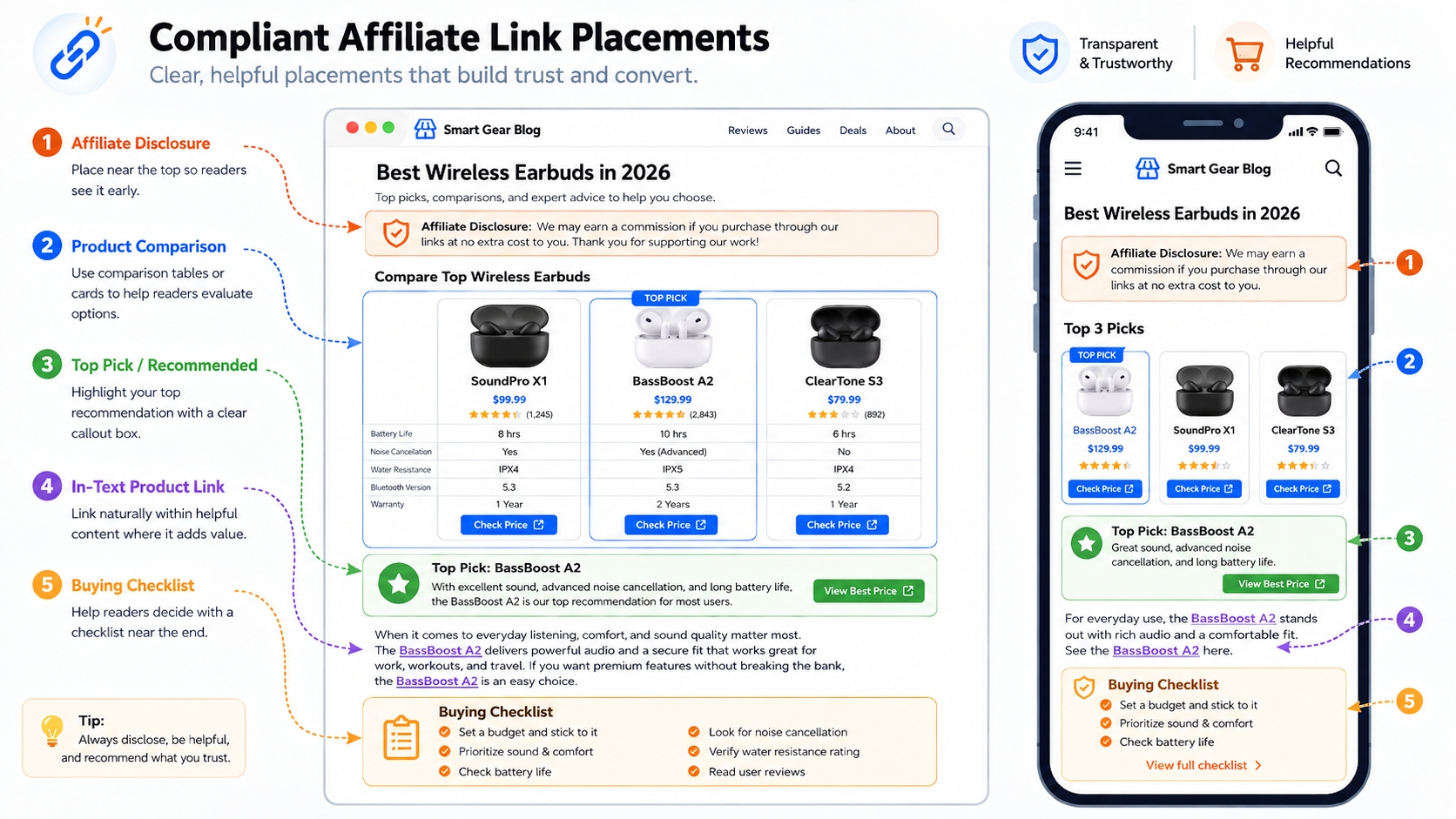
Good placements
- After a clear recommendation
- Inside comparison tables
- Near product pros and cons
- In YouTube descriptions with disclosure
- In resource sections that match the topic
Risky placements
- Links with no disclosure
- Links placed before context
- Overloaded buttons after every paragraph
- Claims about guaranteed earnings
- Misleading claims that Amazon endorses your site
Simple link placement rule
Place an affiliate link after you have answered enough of the buyer's question for the click to feel useful. The link should be the next step, not the whole strategy.
What content converts best for Amazon affiliate marketing?
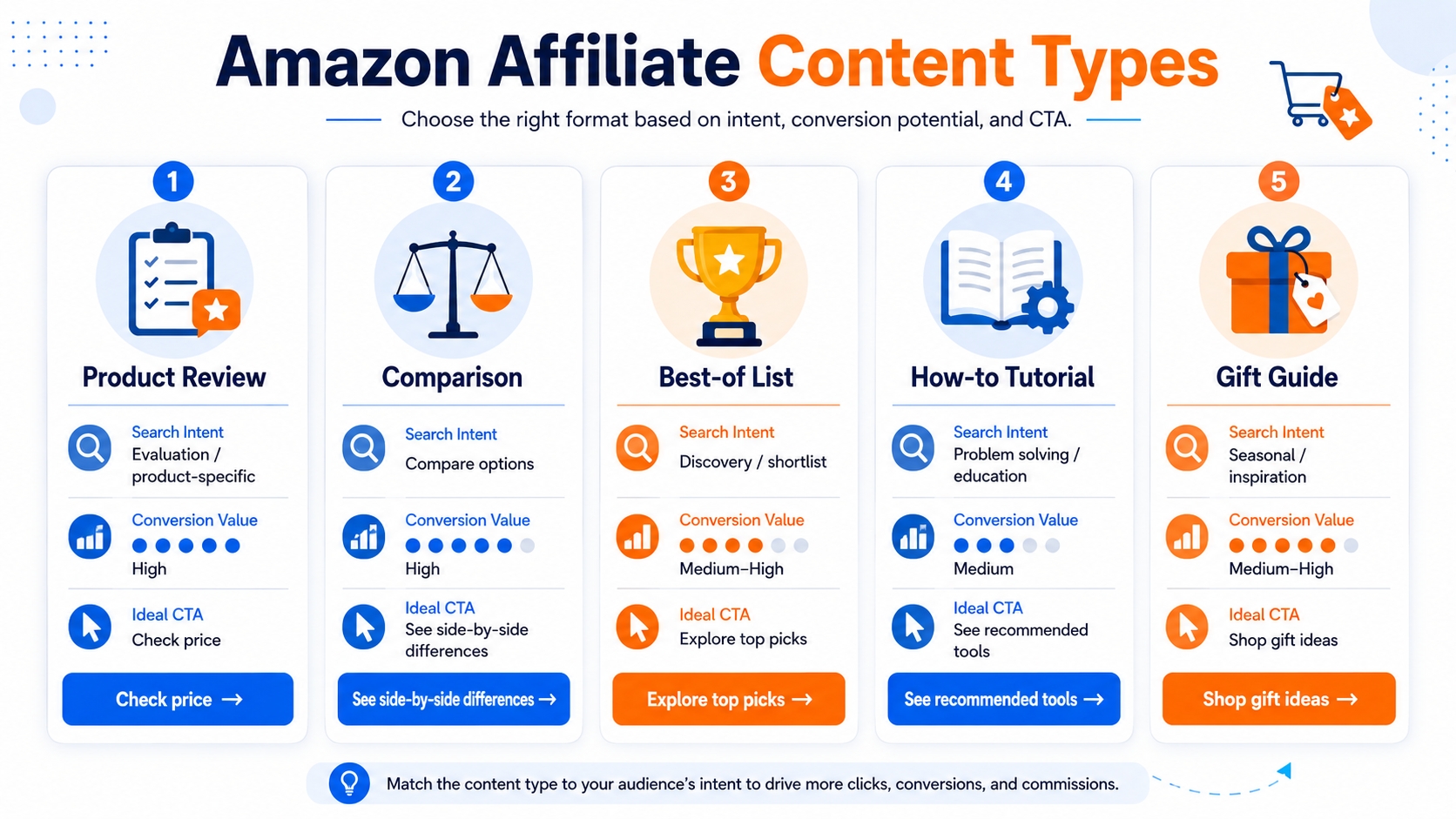
The best Amazon affiliate content usually targets people who are already close to buying. These readers are not just learning what a product is. They are comparing options, checking tradeoffs, validating quality, and looking for a reason to choose one product over another.
| Content type | Search intent | Why it converts | SellerSprite workflow |
|---|---|---|---|
| Product review | Reader wants validation before buying. | A real review answers objections, shows use cases, and builds trust. | Use Review Analysis to find repeated praise, complaints, and buyer concerns. |
| Comparison | Reader is choosing between two or more products. | Side-by-side tradeoffs reduce decision friction. | Use Reverse ASIN to compare keyword coverage and positioning. |
| Best-of list | Reader wants a curated shortlist. | Clear categories help different buyers pick quickly. | Use Keyword Research and Product Research to group products by use case. |
| How-to tutorial | Reader wants to solve a problem. | Product recommendations feel natural when they support the process. | Use Keyword Mining to find problem-based long-tail queries. |
| Gift guide | Reader needs ideas for a specific person or occasion. | Specific filters like budget, recipient, and occasion increase click intent. | Use trend and keyword data to spot seasonal demand early. |
Best traffic sources for Amazon affiliates
Different traffic sources fit different content formats. A blog is strong for evergreen SEO. YouTube is strong for demonstration and trust. Pinterest can work well for visual and lifestyle niches. TikTok can create fast awareness, but affiliate content must still follow platform rules and disclosure requirements.
| Channel | Best content format | Affiliate strategy |
|---|---|---|
| Blog or niche website | Reviews, comparisons, best-of lists, tutorials | Build SEO pages around buyer-intent keywords and update winners regularly. |
| YouTube | Hands-on reviews, setup guides, product demos | Show real use, add clear disclosure, and include relevant links in the description. |
| Gift guides, home ideas, lifestyle roundups | Send users to a helpful landing page or guide that explains the product choices. | |
| TikTok or short video | Quick demos, problem-solution videos, product use cases | Use short content to create interest, then guide users to a compliant link path. |
| Email newsletter | Deal alerts, buying guides, seasonal recommendations | Segment by interest and avoid sending random product lists without context. |
Pro Tip
Start with one primary traffic channel. Once you know which topics earn clicks, repurpose the winners into secondary formats such as YouTube scripts, Pinterest pins, and short videos.
Amazon affiliate disclosure and compliance rules
Compliance is not optional. Affiliate marketing depends on trust, and both Amazon and advertising regulators expect clear disclosure when you may earn from a recommendation.
Disclosure example
As an Amazon Associate I earn from qualifying purchases. This page may contain affiliate links, which means we may earn a commission if you buy through our links, at no extra cost to you.
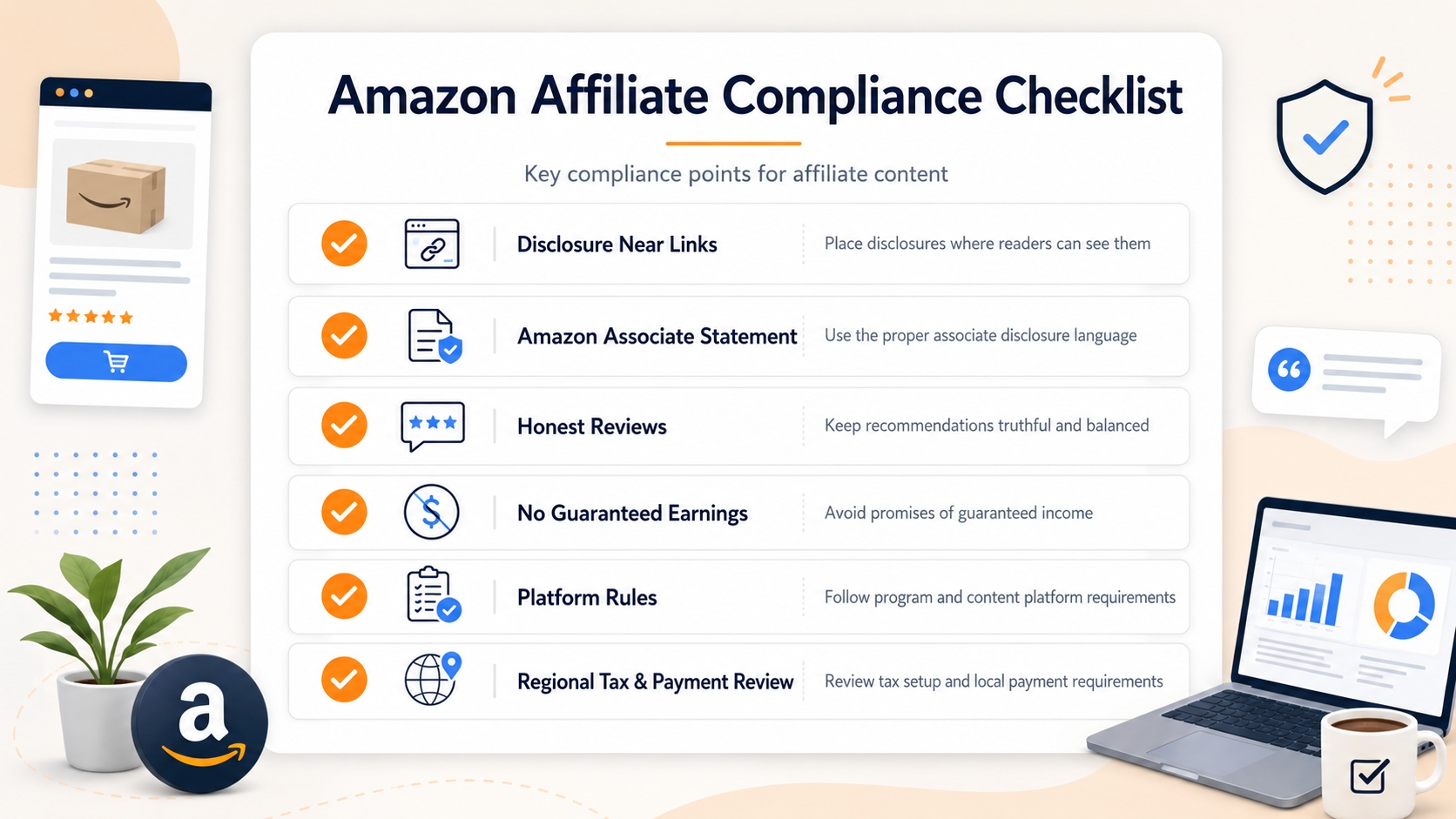
Affiliate compliance checklist
1. Add a clear disclosure
Place disclosure near affiliate links and product recommendations so users can see it without hunting.
2. Use the required Associate statement
Amazon requires Associates to identify themselves with the required Amazon Associate language or a permitted similar statement.
3. Avoid income guarantees
Do not promise specific earnings. Commission income depends on traffic, content quality, product category, conversion, and compliance.
4. Be honest about experience
If you have not personally used a product, say that your recommendation is based on research, specifications, reviews, or comparison criteria.
5. Follow platform rules
YouTube, TikTok, Pinterest, Facebook, email tools, and ad platforms may each have their own disclosure and link rules.
6. Check regional tax and payment rules
Requirements for tax forms, payment methods, and local compliance can differ by region and account setup.
International Amazon Associates notes
Amazon Associates is regional. If your audience is in the US, UK, Canada, Germany, India, or another Amazon marketplace, check the Associates site and Operating Agreement for that marketplace. Commission rates, payment setup, tax forms, eligible programs, and policy details may differ.
| Market consideration | What to check |
|---|---|
| Program site | Use the Associates program for the marketplace you plan to promote. |
| Commission rates | Review the official commission income statement for the region and category. |
| Disclosure language | Use required Amazon language and comply with local advertising rules. |
| Tax and payment | Check tax forms, payment methods, thresholds, and bank details for your region. |
Global audience tip
If your traffic comes from multiple countries, consider whether your link strategy, product availability, and disclosures match each major audience region.
How to use SellerSprite for affiliate content planning
Many new affiliates start with products they personally like. That can work, but it is not a system. A stronger approach is to start with demand, validate product opportunities, study buyer language, and then build content around search intent.
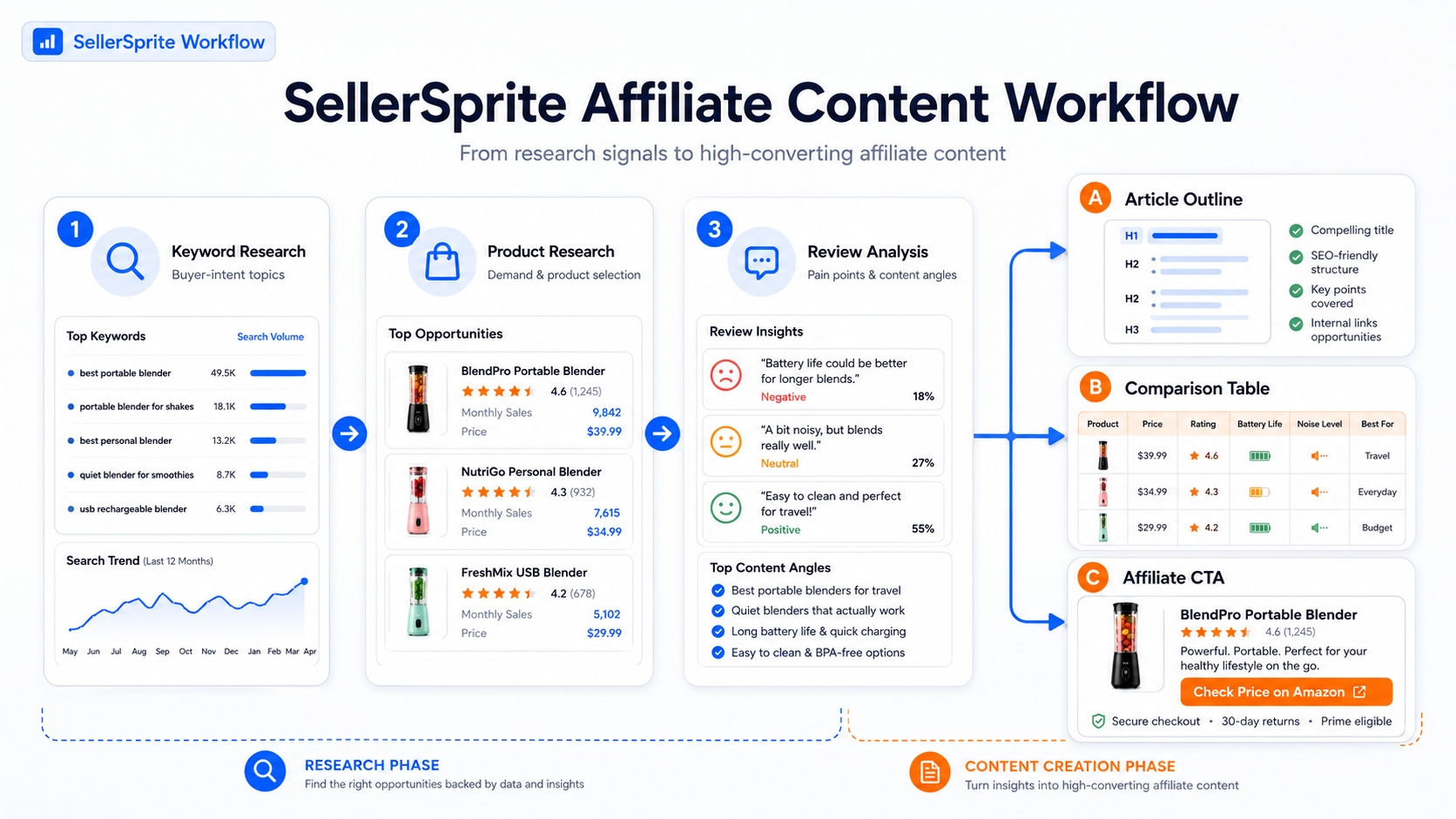
1. Use Keyword Research to find buyer-intent topics
Start with a seed niche and search related terms in SellerSprite Keyword Research. Look for modifiers that show purchase intent, such as best, review, vs, alternative, for beginners, for small spaces, under 50, gift for, and how to use.
Example keyword cluster
- best standing desk converter for small desk
- standing desk converter vs. adjustable desk
- best ergonomic home office setup for beginners
- standing desk converter review
2. Use Product Research to validate products
Product selection matters because the wrong product can waste traffic. Use SellerSprite Product Research to evaluate product demand, category competition, typical price bands, review counts, and whether the product is realistic for your content angle.
3. Use Reverse ASIN to study competitors
If top products already rank for useful search terms, those terms can inspire your article structure. Use Reverse ASIN to discover the keywords connected to competing products, then build sections that answer the searcher's real questions.
4. Use Review Analysis to turn pain points into content angles
Customer reviews often reveal what product pages do not. Review Analysis can help you identify repeated complaints, unexpected use cases, quality concerns, and phrases buyers use naturally. These insights can become review sections, comparison criteria, FAQ questions, and video talking points.
5. Build a content brief before writing
A strong affiliate content brief should include the target keyword, search intent, product shortlist, comparison criteria, disclosure placement, internal links, image plan, FAQ questions, and the main CTA. This makes content easier to write and easier to update.
SellerSprite affiliate content brief template
- Primary keyword: [best product for specific buyer or use case]
- Secondary keywords: [review, vs, under budget, for use case]
- Target reader: [who is buying and why]
- Product shortlist: [3-7 Amazon products]
- Decision criteria: [price, durability, size, compatibility, features]
- Review pain points: [repeated complaints and questions from Review Analysis]
- CTA placement: [comparison table, product card, final recommendation]
- Update plan: [refresh every 60-90 days or after major product changes]
How to grow traffic and commission income over time
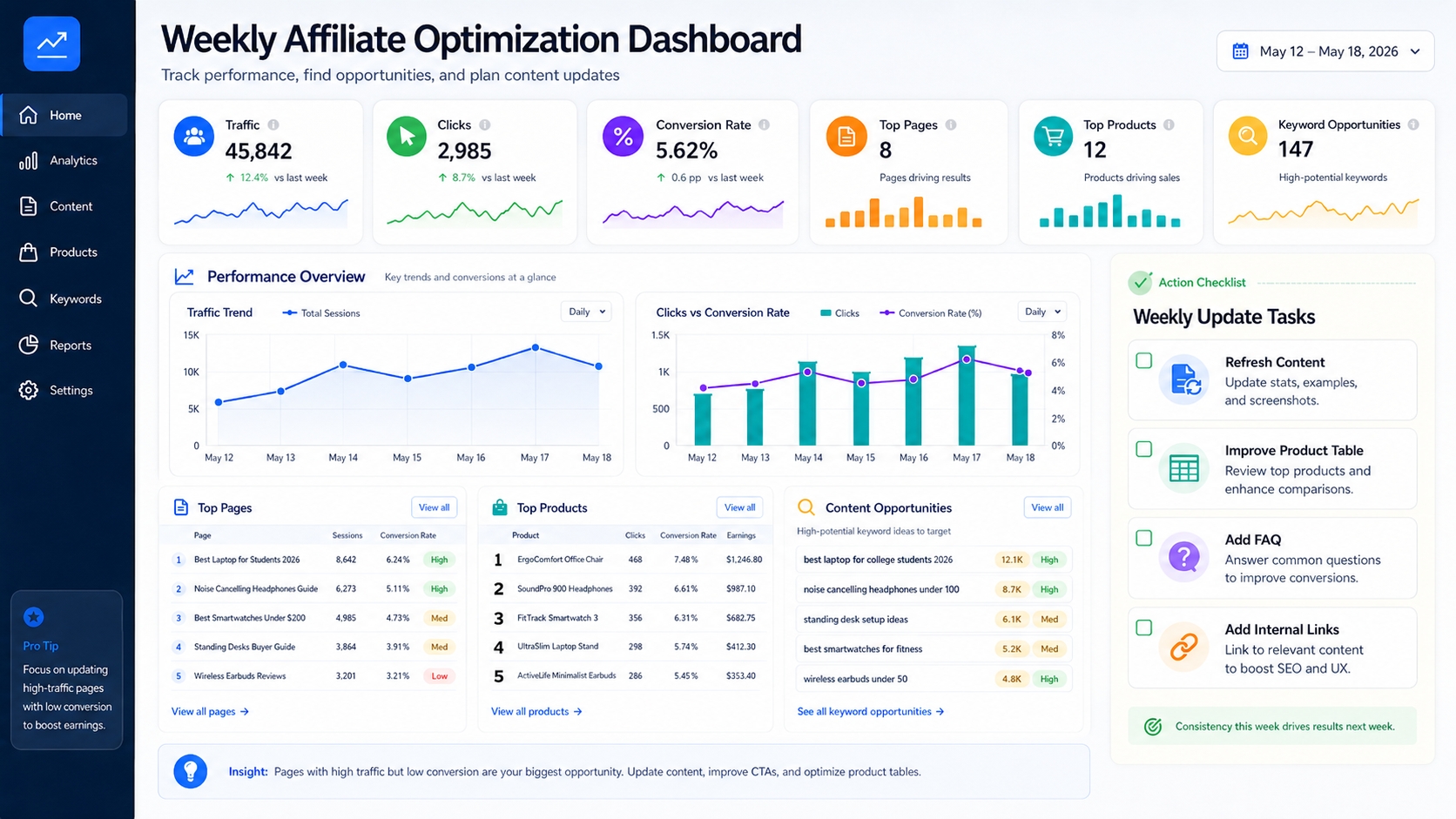
Amazon affiliate income usually grows through iteration. Publish the first version, collect data, then improve the pages that show early signs of clicks, rankings, or engagement. A page that earns clicks but few conversions may need better product selection. A page that ranks but gets low clicks may need a stronger title, clearer introduction, or better search intent match.
Weekly optimization routine
- Check Amazon Associates reports for clicks, ordered items, shipped items, and conversion patterns.
- Identify pages that get clicks but need better product positioning.
- Use SellerSprite Keyword Mining to find related long-tail terms.
- Use Review Analysis to add missing objections, FAQs, and comparison criteria.
- Refresh product tables, screenshots, images, and recommendation labels.
- Add internal links from new informational posts to high-intent affiliate pages.
Common mistake
Publishing more content without improving the content that already gets impressions or clicks. Optimization often produces faster gains than starting from zero every week.
Ready to start earning with Amazon Associates?
Take the first step toward building a sustainable passive income. Use SellerSprite tools to optimize your strategy and drive traffic to your Amazon affiliate links.
FAQs
How does the Amazon Affiliate Program work?
You create content, generate Amazon affiliate links through official tools, and send visitors to Amazon. When a visitor completes a qualifying purchase or eligible customer action, you may earn commission income according to Amazon's rules and category rates.
Do I need a website to join Amazon Associates?
Not always. Amazon may accept qualifying websites, mobile apps, or social media content depending on the region and program requirements. A website is still one of the strongest options for SEO, evergreen content, and long-term affiliate traffic.
What content converts best for Amazon affiliate marketing?
Product reviews, comparisons, best-of lists, how-to tutorials, and gift guides usually convert well because they match buyer intent. The best format depends on the reader's stage in the buying process.
Can I use Amazon affiliate links on YouTube, Pinterest, or TikTok?
You may be able to use affiliate links on approved channels if your region and platform allow it. Always check Amazon's current policies and the platform's own rules. Add disclosure in the same medium where the recommendation appears.
How much can Amazon affiliates earn?
Earnings vary widely by traffic, niche, product category, conversion rate, and compliance. Amazon does not guarantee traffic or commission income, so it is better to treat Amazon Associates as a content business rather than a quick income promise.
Conclusion: build an affiliate system, not just a link page
Amazon Associates can be a practical way to monetize content, but the program rewards strategy more than shortcuts. The affiliates who last are the ones who understand buyer intent, publish useful content, disclose clearly, choose products carefully, and improve pages based on data.
Start small. Pick one niche, build a keyword list with SellerSprite, publish three buyer-intent pages, add compliant disclosures, and track what happens. Then improve the pages that show signs of traffic and clicks. That is how a simple affiliate experiment can become a durable content asset.
About the author
SellerSprite Team publishes practical Amazon workflows based on product research, keyword research, listing optimization, review analysis, and buyer-intent content planning.