As an Amazon seller, you cannot ignore one of the key ways to show you how your products perform and sell on the platform, that is, Amazon's Choice. It is a feature that many buyers have come to rely on for quick decisions while shopping on Amazon. Initially introduced in 2015, this badge is intended to help consumers find highly rated, well-priced products available for immediate shipping. However, its criteria and implications are more nuanced than they might appear at first glance. This blog post explores various aspects of Amazon's Choice, including its benefits, how it works, and the surrounding controversies.
What is Amazon's Choice?
Amazon's Choice is a badge that Amazon awards to certain products based on several performance measures. These include customer reviews, price, and shipping speed. Products with this badge are typically highly rated and well-priced products that are available to ship immediately. And they usually rank high in customers' specific keyword search results, which undoubtedly act as a huge traffic-driving tool for sellers improving their sales and brand awareness.
There are mainly 3 types of sublabels within Amazon's Choice. Let's search for the keywords "outdoor bird feeder" on Amazon as an example.
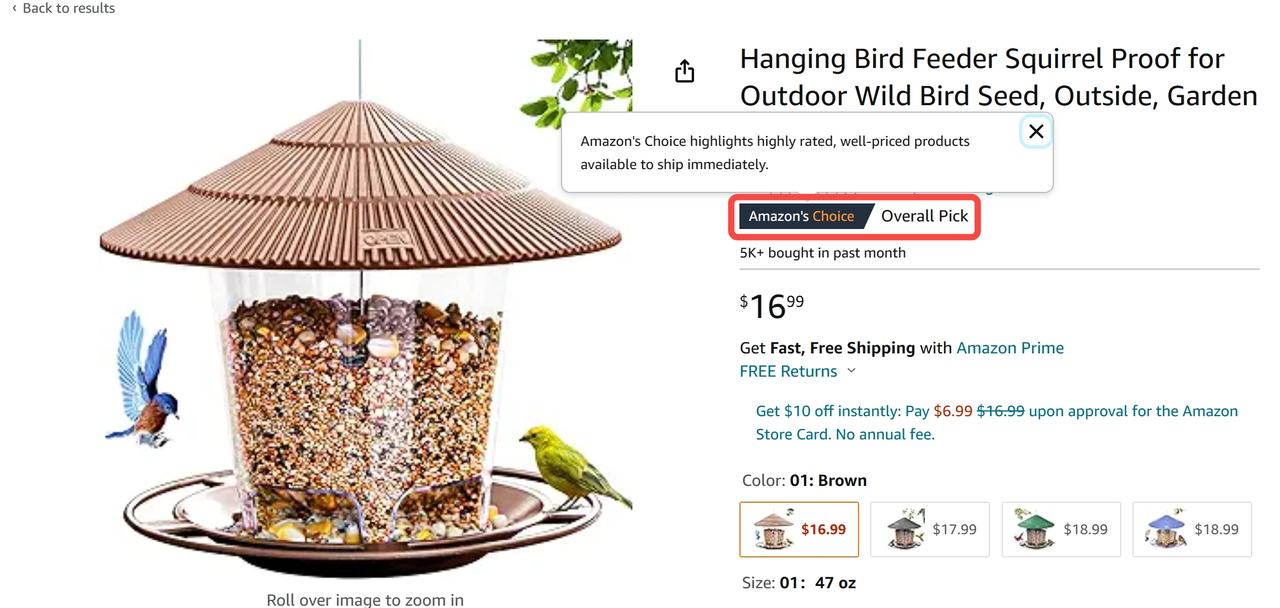
The first search result displays as Overall Pick. As the most selected item under the searched keyword, it can consolidate the best seller position under the word and make the hot sale product continue to sell well.
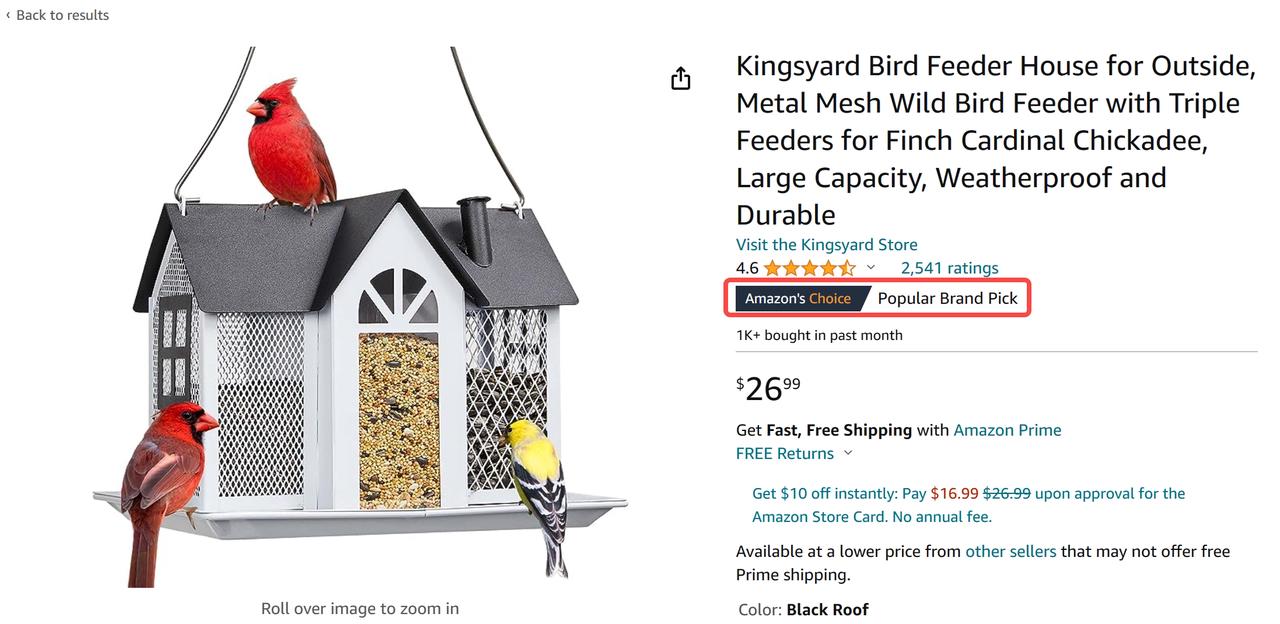
The second is Popular Brand Pick. This label indicates that the item is the brand with the widest vertical coverage and the most excellent data under the search term, encouraging the seller to build a vertical brand.
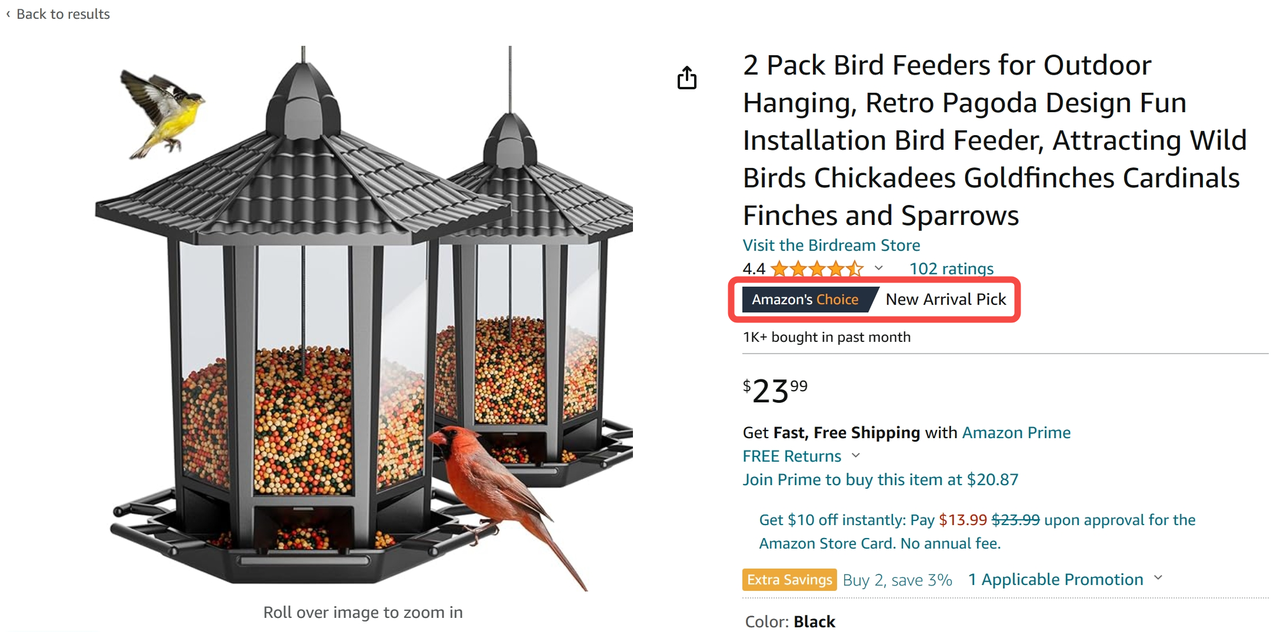
And the third one is shown as New Arrival Pick. It is an encouraging sign for new releases, aiming to help promote the newly launched product in the market.
How Amazon's Choice Benefits?
Amazon's Choice is a feature that not only assists customers in making purchasing decisions but also provides significant advantages for sellers on the platform. Here’s how it benefits both parties:
For customers:
- Time-Saving: Customers often feel overwhelmed by the vast number of options available on Amazon. The Amazon's Choice badge acts as a quick reference to help customers make confident decisions, indicating that the product is well-reviewed, reasonably priced, and of good quality, which helps them save time on struggling for a choice.
- Quality Assurance: Since products labeled as Amazon's Choice are typically well-reviewed and highly rated, customers can expect a level of quality and satisfaction from these products, reducing the likelihood of disappointment.
- Speed and Convenience: Products with the Amazon's Choice badge often come with benefits such as Prime eligibility, which includes faster shipping. This is particularly appealing for customers needing quick delivery.
For sellers:
- Increased Visibility: Products awarded the Amazon's Choice badge gain enhanced visibility through prominent placement in search results and sometimes on the product category pages. This increased visibility can drive higher traffic to the item and potentially lead to more sales.
- Enhanced Credibility: Having a product labeled as Amazon's Choice can enhance a seller's credibility and reputation on the platform. This badge acts as an endorsement from Amazon, which can encourage trust and confidence among potential customers.
- Boost in Sales: The increased visibility and credibility often result in a direct increase in sales. Customers are more likely to purchase a product that has been vetted and recommended by Amazon, especially when faced with a multitude of similar options.
- Competitive Advantage: In competitive marketplaces, having the Amazon's Choice badge can differentiate a product from numerous similar offerings. It provides a competitive edge that can attract more customers to a seller's product over others.
How Does Amazon Choose These Products?
According to Amazon's rule, the Amazon's Choice badge cannot be obtained by payments from brands or sellers, nor is there a process for them to submit or nominate their products for this highlight. Amazon uses algorithms to determine whether a product is worth recommending as an Amazon's Choice. The algorithm likely considers factors like:
- Customer reviews and ratings
- Return rates
- Price competitiveness
- Inventory levels
- Shipping options
- Accurate keywords in listings
How to Get Your Product Awarded as Amazon's Choice?
Earning the Amazon's Choice badge is a goal for many sellers because it can significantly boost visibility and sales. While Amazon does not explicitly state how to get the Amazon's Choice badge, several factors are known to influence whether a product is selected for this designation. Here’s how you can improve your chances of obtaining the Amazon's Choice badge:
1. Optimize for High Relevance and Quality
User Comments

-
Add photo
log-in
All Comments(0)
/
My Comments
Hottest
/
Latest
Content is loading. Please wait
-

There are no comments at this moment.
Latest Article
- Amazon 2025 Annual Data Report: What Changed and What Sellers Should Do Next
- SellerSprite Academy: Amazon FBA Beginner to Master
- How to Find Someone's Amazon Storefront and Seller Information
- Amazon Stock and Seller Insights: Market Signals Guide for Sellers
- Viral Launch vs. SellerSprite: Full Feature Breakdown
- Identifying "Cerebro" Metrics in Our Reverse ASIN Tool
Tags
- 1688(1)
- ABA(7)
- AI(1)
- API(1)
- AWD(1)
- AliExpress(1)
- Alibaba(4)
- Amazon(182)
- Amazon 3PL(1)
- Amazon A9 Algorithm(7)
- Amazon ABA report(1)
- Amazon ASIN(2)
- Amazon ASIN Label(1)
- Amazon Advertisement(11)
- Amazon Advertising(1)
- Amazon Arbitrage(1)
- Amazon Barcode(1)
- Amazon Brand Analytics(3)
- Amazon Business(1)
- Amazon Buyer-Seller Messaging(1)
- Amazon Category(14)
- Amazon Category Research(13)
- Amazon Competitor Analysis(10)
- Amazon Content(1)
- Amazon Distribution(1)
- Amazon FBA(33)
- Amazon FBA cost(2)
- Amazon FBA fees(1)
- Amazon FBA profit calculator(2)
- Amazon FBM(1)
- Amazon FNSKU(1)
- Amazon Flywheel(1)
- Amazon Gated(1)
- Amazon Glitch(1)
- Amazon Global(1)
- Amazon Handmade(1)
- Amazon Infographic(1)
- Amazon Inventory(1)
- Amazon KDP(1)
- Amazon Keyword Research(21)
- Amazon Keyword Tracking(1)
- Amazon Keywords Finder(5)
- Amazon Lightning Deal(1)
- Amazon Listing Optimization(12)
- Amazon Market Report(10)
- Amazon Market Research(19)
- Amazon Merchant Token(1)
- Amazon Message Center(1)
- Amazon Outlet(1)
- Amazon PPC Optimization(10)
- Amazon Price Glitches(1)
- Amazon Prime Day(2)
- Amazon Product Research(26)
- Amazon Review(5)
- Amazon Review Analysis(5)
- Amazon SEO(6)
- Amazon SPN(1)
- Amazon Seasonal Items(1)
- Amazon Seller Events(1)
- Amazon Seller Fees(1)
- Amazon Seller ID(2)
- Amazon Seller Plan(1)
- Amazon Seller Tools(1)
- Amazon Service Provider Network(1)
- Amazon Solution Provider Network(1)
- Amazon Sponsored Ads(1)
- Amazon Store(4)
- Amazon Storefront(4)
- Amazon Storefront Tracker(2)
- Amazon Storefront Traffic(1)
- Amazon TACoS(1)
- Amazon Tools(17)
- Amazon Ungated(1)
- Amazon Used Items(1)
- Amazon Video(1)
- Amazon Warehousing(1)
- Amazon Wholesale(1)
- Amazon Wishlist(1)
- Amazon brand analysis report(1)
- Amazon industry information(2)
- Amazon search terms(1)
- Amazon seller ID(2)
- Amazon source(1)
- Amazon supplier(1)
- Amazon's Choice(2)
- Black Friday(1)
- Buy Box(1)
- ChatGPT(1)
- Chrome Extensions(1)
- Cyber Monday(2)
- Dropshipping(1)
- FaceBook(3)
- Facebook(3)
- Facebook Marketplace(1)
- Free Trial(3)
- GTIN Exemptions(1)
- Global Brand Database(1)
- Google Trends(1)
- Guest Blog(9)
- Helium 10(1)
- Keepa Extension(1)
- LLC(1)
- Off Amazon(4)
- Private Label(1)
- Reverse ASIN Keyword(1)
- Ripple(1)
- SEO Tool(1)
- SellerSprite(17)
- SellerSprite Extension(3)
- SellerSprite-Guide(2)
- Share(3)
- Shulex(3)
- Temu(4)
- TikTok(1)
- TikTok Shop(1)
- Top Products(1)
- Twitter(2)
- Walmart(1)
- amamon(1)
- amazon(182)
- amazon report(1)
- ecommerce(3)
- how to make money(2)
- make money(6)
- make money on amazon(5)
- market share(1)
- profits hunt(4)